
Federal Release Status Paths
A past BOP release date with no institution listed means the person left BOP custody on that date according to the locator field guide. It does not show that all legal restraint ended. The person may begin federal supervised release, enter another agency's custody, or face a separate state or local matter. “Not in BOP custody” also needs context because it can describe release, transfer beyond BOP coverage, or a person BOP never held.
A future date is projected and can change. “UNKNOWN” means the term has not been determined in the locator. “IN TRANSIT” means movement within or between custody settings, not community release. Read the register number, age, race, sex, release date, and location together, then compare them with the federal docket.
| BOP display | Careful reading |
|---|---|
| Past release date, no facility | Released from BOP custody on the displayed date |
| Future release date | Projected date that may change |
| Not in BOP custody | BOP does not currently hold the person; next status is not established |
| IN TRANSIT | Custodial movement, not community release |
| UNKNOWN | Release term is not determined in the public result |
Confirm a Federal Release
The BOP Inmate Locator is the main public tool for federal sentenced custody from 1982 onward. A verified register number is stronger than a name-only search. Name results should be narrowed with age and other displayed identifiers, since the locator can return several people with the same or similar names.
- Search by BOP/register, DCDC, FBI, or INS number when a verified identifier is available.
- Otherwise use the person's full name and narrow the result with age, race, and sex.
- Open the correct match and record the exact release date and location wording.
- Check the federal court docket for the judgment, release order, or supervised-release terms.
- If the person was pretrial or transferred by the county to USMS, use the responsible Marshals district and federal court record rather than assuming BOP coverage.
The broader Overton County release search helps determine whether the sheriff, TDOC, BOP, or another custodian owns the relevant event.
Federal Release Record Contacts
The BOP locator is a nationwide portal, not an Overton County facility contact. It supplies public status fields but does not replace the sentencing court record. Questions about a specific prison should go to the institution listed in a matched record. Questions about pretrial detention or a county entry showing “USMS” belong to the federal court and the responsible U.S. Marshals district.
Federal Bureau of PrisonsNationwide prison system
Inmate Locator
Locator field guide
No BOP institution verified in Overton County
USMS houses many pre-sentenced prisoners in BOP, state, local, or private facilities and has no equivalent public released-person locator. The Marshals prisoner information page explains that federal pretrial custody can cross facility systems. For historical agency records, use the responsible agency's current records process with a narrow description and verified identity details.
A federal docket may show a release order even though the public locator has no useful record. The order establishes legal authority. It may not show the exact time staff completed physical release or whether a different agency immediately assumed custody.
BOP Is Not Local
The Federal Bureau of Prisons operates federal prisons and contract-custody functions across the nation. No BOP prison was identified within Overton County. Its locator should appear in an Overton search only after a federal clue exists, such as a federal case number, register number, sentencing record, or local transfer entry naming a federal authority.
A person charged in federal court may spend the pretrial stage in a local, state, private, or BOP-operated setting under Marshals management. That person may not appear like a sentenced BOP prisoner. After conviction and designation, BOP records become more useful. After release, the locator can retain the release date even though custody ended.
The locator's public result fields include the person's name, register number, current age, race, sex, release date, and location. BOP says the data update daily. These fields should be compared as a set, not copied from a name-only result. A past date paired with no institution supports the stated BOP release interpretation. A facility name or movement code points to continuing federal custody instead.
The official locator form shows the federal search routes.
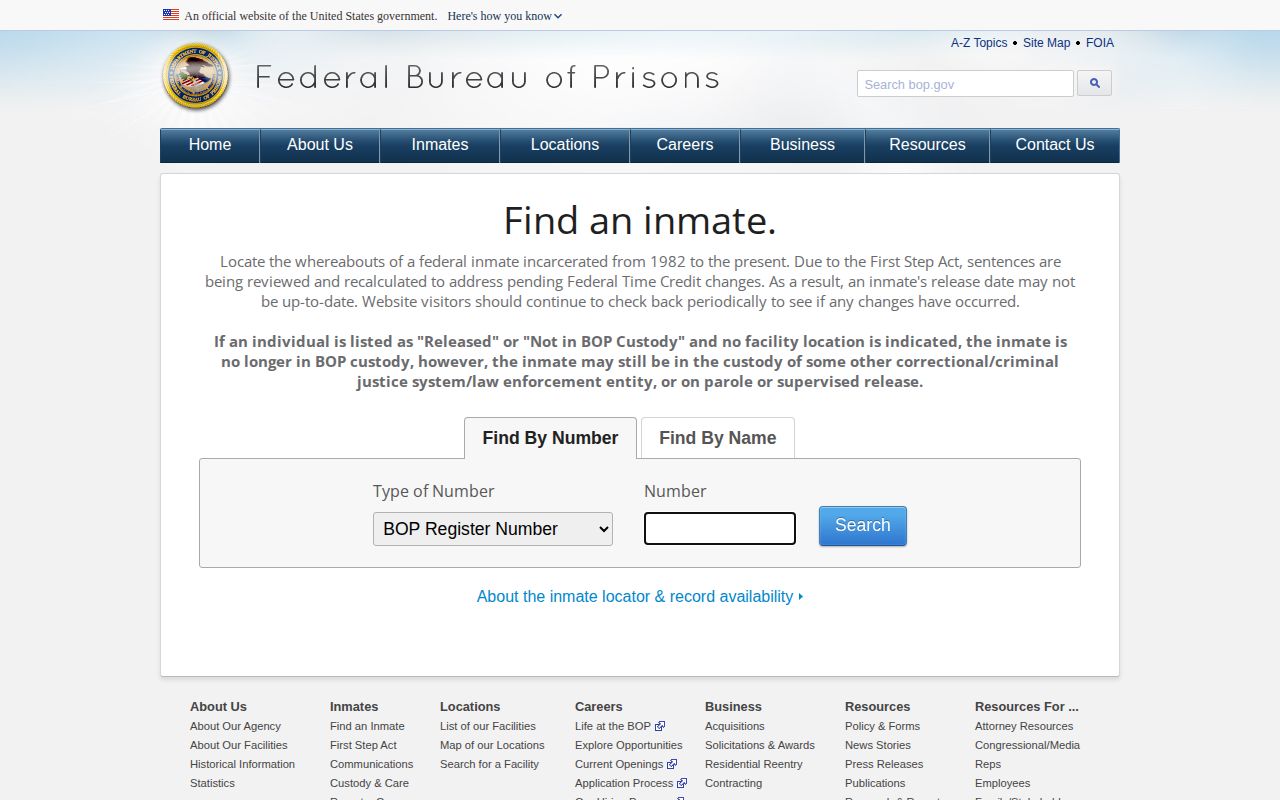
The form is a federal system search. It contains no Overton County jail release feed and should not be labeled as one.
Overton Federal Transfer Records
An Overton County jail record that says a person was delivered to USMS documents the end of county custody by transfer. It does not document community release. Check the official Overton jail source, request the event from the sheriff, and use the local telephone-information limits to route court questions correctly. The federal case docket should then identify the court proceeding, detention status, and any later release order. The Marshals Service can help route a proper inquiry, but it does not publish a nationwide release roster.
Federal pretrial release may involve conditions set by the court. The docket is the legal source for those conditions. BOP becomes the primary locator after a sentenced prisoner enters its system, although timing and data coverage still require care. When the county event and federal record use different dates, preserve both and identify what each date measures.
The Marshals Service may place a pretrial prisoner in a county, state, federal, or private facility through an agreement. It does not own a separate public jail network that can be searched like BOP. A local transfer to USMS can therefore precede several facility moves. The federal docket gives the best public legal timeline, while a focused agency record request supplies historical custody detail when available.
Does a federal writ mean release? No. A writ can cause temporary movement for court proceedings while another sentence or custodian remains active. Seek the jail destination entry and the federal docket.
Note: Use PACER or the responsible federal clerk for the docket; no complete public USMS locator exists.
Older Federal Release Records
The BOP locator covers federal prisoner records from 1982 to the present. Earlier federal custody may require a National Archives request. Even within the covered period, spelling, aliases, identifier errors, and pretrial-only detention can produce no match. No result should be reported as proof that the person was never in federal custody.
Start with records already in hand. A judgment, commitment, register number, federal case number, or county transfer entry can identify the right agency and time span. Request only the record needed, such as a release date, location history, or commitment and release documentation, and expect lawful redactions.
- Register number
- The BOP identifier used for the strongest locator search.
- Supervised release
- Court-ordered oversight after imprisonment, separate from BOP physical custody.
- Pretrial detention
- Custody while a federal case is pending, often managed through USMS.
- Transfer
- Movement to another custodian, not a return to the community.
Reconcile Federal Release Dates
A strong federal release check pairs the locator with the court file and, when relevant, the prior Overton jail event. The BOP date answers when its custody ended. The Overton clerk handles local trial records, while the federal clerk owns the federal docket. The county record shows when local custody ended and where the person went. One cannot safely stand in for the others.
If a future locator date changes, record both observations and their dates. Sentence computation, credits, court action, or other custody can affect the display. Do not turn a projected field into a promise. For an actual release, use the past date, no-facility indication described by BOP, and any formal agency record needed for confirmation.
A released federal prisoner may still be subject to supervised release. That status is not parole under the Tennessee Board of Parole and is not TDOC probation. The federal sentencing court and probation system control it.
Note: BOP data update daily, so every changing result should carry an observation date.